The Oregon Coast is a remarkable destination for hikers who want more than beautiful scenery. Stretching along the Pacific Ocean in the northwestern United States, this rugged coastline combines dramatic cliffs, sandy beaches, towering forests, historic lighthouses, and landmarks that tell stories of Indigenous communities, early explorers, maritime trade, and shipwrecks. Every stretch of trail offers an opportunity to discover how people have lived, traveled, and worked along this fascinating coast.
For outdoor enthusiasts, hiking the Oregon Coast is a chance to experience nature while exploring the past. You might walk through a coastal forest to reach a historic lighthouse, follow a path overlooking a beach where shipwrecks occurred, or explore a national historic park connected to the famous Lewis and Clark expedition. Along the way, you can watch seabirds soar above the waves, discover tide pools filled with marine life, and enjoy sweeping views of the Pacific Ocean.
Whether you are planning a weekend getaway or a longer outdoor adventure, the Oregon Coast has hiking destinations for different interests and fitness levels. Some trails are short and accessible, while others lead through dense forests, climb steep headlands, or cover several miles of coastline.
Here are some of the best places to hike through history along the Oregon Coast, including the landmarks, natural features, and historical attractions worth looking for on your journey.
1. Fort Stevens State Park: Discover a Shipwreck on the Beach
At the northern end of the Oregon Coast, near Astoria, Fort Stevens State Park offers a fascinating combination of coastal hiking, military history, and maritime exploration. The park is a great starting point for anyone interested in how the Pacific Ocean shaped travel, commerce, and defense along the American coastline.
Fort Stevens served as a military installation for more than 80 years, protecting the mouth of the Columbia River. Its history stretches from the Civil War era through World War II, making it an especially interesting destination for visitors who enjoy exploring historic structures as well as natural landscapes.
One of the most memorable sights in the park is the wreck of the Peter Iredale, a sailing ship that ran aground in October 1906. Strong winds and difficult coastal conditions drove the vessel onto the beach, where its rusting remains have become one of the Oregon Coast’s best-known historic attractions.
What to see on your hike
- The Peter Iredale shipwreck: Walk across the sand to view the exposed remains of the ship. Its weathered metal structure creates a striking contrast against the ocean and makes an excellent subject for coastal photography.
- Historic military batteries: Explore the remains of the fort’s coastal defense system and learn how soldiers once guarded the Columbia River entrance.
- Coastal dunes and beaches: Enjoy open views of the Pacific, watch shorebirds, and observe how wind and waves continually reshape the coastline.
- Forest trails and wetlands: Explore the park’s quieter inland areas, where coastal vegetation and wildlife offer a different experience from the exposed beach.
The shipwreck is particularly rewarding for history enthusiasts because it provides a tangible connection to the dangers faced by sailors before modern navigation and rescue technology became widespread.
Hiking tip: Check the tide and weather before heading to the shipwreck. The beach can be windy and cold, even when conditions inland seem pleasant. Stay clear of unstable metal and respect any safety barriers around the wreck.
2. Ecola State Park: Walk Through Coastal History Near Cannon Beach
For hikers who enjoy dramatic headlands, forest paths, and sweeping ocean views, Ecola State Park is one of the most appealing destinations on the northern coast.
Located near Cannon Beach and Seaside, Ecola features trails that wind through coastal forests before opening onto viewpoints overlooking rugged cliffs, offshore sea stacks, and long stretches of beach. The landscape is beautiful, but its history makes it even more compelling.
The area is connected to the journey of the Lewis and Clark expedition. In 1806, members of the expedition explored this part of the coast while searching for a source of whale blubber reported by local Indigenous people. Their visit became part of the broader story of early American exploration of the Pacific Northwest.
The region’s deeper history, however, reaches much further back. Indigenous peoples have lived along and traveled through this coastal landscape for generations, relying on its marine resources, forests, and interconnected routes.
What to see on your hike
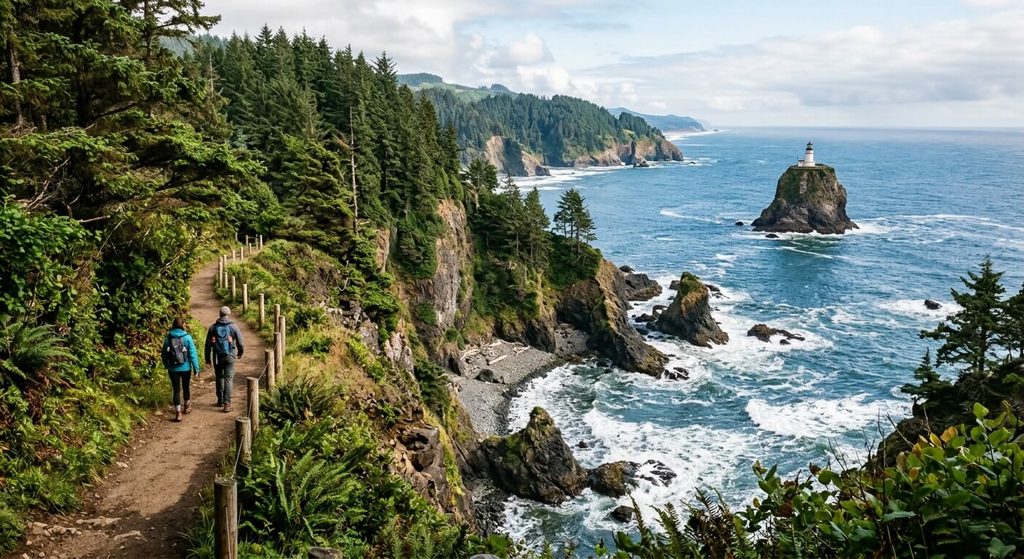
- Tillamook Rock Lighthouse: Look offshore toward this historic lighthouse, which was first illuminated in 1881. It stands on a rocky sea stack and reflects the challenges of guiding ships through dangerous Pacific waters.
- Indian Beach: Follow the paths toward this scenic beach, where rocky formations, crashing waves, and coastal forest create a beautiful place to pause.
- Forest trails and viewpoints: Notice the thick growth of Sitka spruce, ferns, and other coastal plants as you move between shaded trails and open overlooks.
- Cannon Beach and Haystack Rock views: Depending on your viewpoint, you may be able to see the famous sea stack rising from the water near Cannon Beach.
The lighthouse is an especially meaningful sight because the rocky coastline once presented serious hazards to ships carrying passengers and goods. Its isolated location also illustrates how challenging lighthouse maintenance could be.
Ecola is a rewarding destination for hikers who want to combine landscape photography with an appreciation for exploration, Indigenous history, and maritime navigation.
Hiking tip: Trail conditions can become muddy after rain, and some routes include steep sections. Check current park advisories before visiting, as coastal erosion and landslides can affect access.
3. Hug Point State Recreation Site: Find the Oregon Coast’s Old Road
A short distance south of Cannon Beach, Hug Point State Recreation Site offers a fascinating look at how people once traveled along the Oregon shoreline.
Today, visitors come for the waterfall, sandstone cliffs, sea caves, and beautiful beach. Yet one of the most interesting features is a surviving section of an old road carved into the rock along the shoreline.
Before U.S. Highway 101 was completed in the 1920s, coastal beaches served as important transportation routes. Stagecoaches and other travelers sometimes had to navigate around rocky headlands when the tide permitted. At Hug Point, the route around the point was so difficult that a road was cut into the sandstone to help travelers pass. Remnants of this early roadway and its wheel ruts can still be seen.
What to see on your hike
- The historic stagecoach road: Look for the carved route and wheel ruts in the sandstone. They offer a glimpse into an era when the beach was an essential transportation corridor.
- The seasonal waterfall: Depending on rainfall, a waterfall flows down the rock face toward the beach, creating a lovely spot for photographs.
- Sea caves and rock formations: Observe the shapes created by waves and erosion over time. Only explore areas that are safely accessible.
- Tide pools: At suitable low tides, examine the rocky shoreline for small marine creatures, shells, and other signs of coastal life without disturbing them.
Hug Point is an excellent example of how natural geography influenced everyday life. The same cliffs that attract photographers today once presented real obstacles for travelers trying to reach coastal communities.
The historical road is particularly interesting because it connects the scenery directly to human ingenuity. Rather than simply admire the cliffs, you can see how people modified the landscape to make transportation possible.
Hiking tip: Visit at low tide and check the tide tables carefully before setting out. Rising water can cut off access around rocky points, and sneaker waves can reach much farther up the beach than expected. Never enter a sea cave or continue around a headland if your return route could be flooded.
4. Cape Meares: Explore a Historic Lighthouse and an Ancient-Looking Forest
If your ideal hike includes maritime history, wildlife watching, and unusual natural landmarks, Cape Meares State Scenic Viewpoint is a wonderful place to explore.
Situated along the Three Capes Scenic Route, Cape Meares combines steep ocean cliffs with old-growth forest and views of offshore rocks where seabirds gather. Its short trails make it an attractive option for visitors who want a historical experience without committing to a strenuous day hike.
The highlight is Cape Meares Lighthouse, built in 1889 and first illuminated on January 1, 1890. Although it is only 38 feet tall, the lighthouse used a powerful Fresnel lens designed to help mariners identify the headland from far out at sea.
What to see on your hike
- Cape Meares Lighthouse: Follow the short path to the lighthouse and take time to learn how its light helped guide vessels along the coast. The surrounding viewpoints provide excellent opportunities to photograph the ocean and rugged cliffs.
- The Octopus Tree: Visit the unusual Sitka spruce with sprawling branches that resemble the arms of an octopus. It is one of the area’s most recognizable natural attractions.
- Old-growth Sitka spruce forest: Walk through the forest and observe its towering trees, dense greenery, and shaded understory.
- Offshore rocks and seabird habitat: Scan the water and cliffs for seabirds. During seasonal migrations, you may also spot gray whales passing the headland.
Cape Meares is especially appealing because it allows visitors to experience two different kinds of history. The lighthouse represents the development of maritime navigation, while the old-growth forest illustrates the ecological heritage of the Oregon Coast.
Interpretive panels along the paths provide additional information about local wildlife and the landscape. The short lighthouse loop and nearby tree trails are good choices for travelers who prefer shorter walks with plenty of opportunities to stop and explore.
Hiking tip: Bring binoculars if you want to watch whales or seabirds. Lighthouse access and tours can vary by season, so check official park information before planning your visit.
5. Neahkahnie Mountain: Hike Above the Pacific and Discover Local Legends
For hikers who want a more challenging outdoor adventure, Neahkahnie Mountain offers a rewarding climb with sweeping views of the Pacific Ocean and the coastline around Manzanita.
The mountain is part of the northern Oregon Coast’s distinctive headland landscape. Its forested slopes rise above the ocean, creating a scenic hiking destination where nature, local stories, and regional history come together.
Neahkahnie is also associated with legends of buried treasure and stories about early encounters between European visitors and Indigenous communities. These stories add intrigue to the landscape, although legends should be distinguished from documented historical evidence. The mountain and surrounding coast have a much longer history of Indigenous presence and use than the accounts of European explorers alone can convey.
What to see on your hike
- Ocean viewpoints: Look out across the Pacific toward the curving coastline, sandy beaches, and offshore rocks.
- Coastal forest: Notice the thick vegetation, moss-covered branches, and ferns along the trail.
- Manzanita and surrounding beaches: From suitable viewpoints, enjoy the contrast between the green headlands and the pale sand below.
- Historical landscapes: Consider how the rugged terrain shaped travel along the coast and why headlands were important landmarks for people navigating the shoreline.
The hike is particularly rewarding on clear days, when the expansive ocean views make the climb worthwhile. It is also an excellent place to appreciate how coastal geography shaped historic travel routes before modern roads connected the region.
For travelers interested in the history of the Oregon Coast, Neahkahnie Mountain offers a reminder that landscapes can preserve both documented history and stories passed down through generations.
Hiking tip: The trail includes elevation gain and uneven ground, so wear sturdy footwear and bring water. Choose a route that matches your fitness level, and check current trail conditions before setting out.
6. Lewis and Clark National Historical Park: Follow the Story of Early Exploration
At the mouth of the Columbia River, Lewis and Clark National Historical Park offers a deeper look at the expedition that traveled across North America to reach the Pacific Ocean.
The park preserves and interprets sites connected to the Corps of Discovery expedition, including the Fort Clatsop area near Astoria. In the winter of 1805–1806, the expedition stayed at Fort Clatsop before beginning its journey back east.
Although not every trail in the park follows the open shoreline, the forest paths, riverside walks, and nearby coastal landscapes make it a valuable stop for hikers interested in the region’s exploration history.
It is important to remember that the expedition traveled through Indigenous homelands. Native communities already had extensive knowledge of the region, established trade networks, and routes connecting the coast to inland areas. Learning about these communities gives visitors a fuller understanding of the history surrounding the expedition.
What to see on your hike
- Fort Clatsop: Visit the reconstructed fort and interpretive exhibits to learn how the expedition spent the winter and prepared for its return journey.
- Forest trails: Walk through the lush coastal woodland that characterizes much of this part of Oregon.
- The Netul River area: Enjoy the quiet scenery around the river and learn about the waterways that were important to travel and daily life.
- Interpretive exhibits: Look for information about the expedition’s journey, Indigenous communities, and the challenges of wintering on the coast.
This destination is particularly worthwhile for families, students, and history enthusiasts who want to understand the human stories behind the Pacific Northwest’s historic landscapes.
Rather than focusing only on the achievements of the expedition, take time to consider the Indigenous knowledge and assistance that shaped the travelers’ experiences. That broader perspective makes the visit more meaningful.
Hiking tip: Check the park’s official visitor information for current trail access, exhibits, and any ranger-led programs. You can combine a short forest walk with a visit to Fort Clatsop for a balanced day of outdoor exploration and historical learning.
7. Port Orford Heads State Park: Discover the History of Coastal Rescue
On the southern Oregon Coast, Port Orford Heads State Park offers a compelling combination of rugged coastal scenery and maritime rescue history.
The waters off southern Oregon have long challenged sailors. Strong currents, rocky headlands, and powerful waves made shipwrecks a serious danger, particularly before modern navigation and rescue systems became available.
Frequent shipwrecks in the late nineteenth and early twentieth centuries prompted the establishment of a lifesaving station at Port Orford Heads. From 1934 to 1970, Coast Guard surfmen stationed here monitored a stretch of coastline extending between Cape Blanco and Cape Sebastian. During World War II, lookouts also watched for enemy aircraft, ships, and submarines.
What to see on your hike
- Historic Lifeboat Station Museum: When open, explore exhibits about the lifesaving station and the people who responded to emergencies along the coast.
- Ocean overlooks: Follow park trails to viewpoints overlooking rugged cliffs and the Pacific.
- Coastal vegetation: Look for native plants adapted to salty air, wind, and exposed headlands.
- Marine wildlife: Scan the water for seabirds and marine mammals, keeping a respectful distance from wildlife.
The park gives hikers a chance to understand the risks associated with life along the Pacific. The same ocean that makes the Oregon Coast beautiful can also become dangerous, and the historic lifesaving station represents the people who worked to protect mariners.
The experience is different from visiting a lighthouse. Instead of focusing primarily on navigation, Port Orford Heads highlights rescue, emergency response, and the human effort required to survive the coast’s harsh conditions.
Hiking tip: Trails may be exposed to strong winds and wet weather. Check museum hours and park advisories before visiting, and stay behind barriers near steep cliffs.
8. The Oregon Coast Trail: Connect History, Beaches, and Coastal Communities
For travelers who want to experience several historic landscapes in one trip, the Oregon Coast Trail provides an opportunity to explore the coastline on foot over multiple days or through individual day hikes.
The trail follows much of Oregon’s coastline, linking sandy beaches, headlands, forest paths, and coastal communities. Oregon State Parks describes it as a route of approximately 362 miles, although the distance covered depends on the route and connections used. Parts of the trail follow public beaches and park trails, while others require travel along roads or highway shoulders.
The trail’s history is closely connected to the movement to preserve public access to Oregon’s beaches. In 1913, legislation supported public use of the ocean shoreline, and Oregon’s 1967 Beach Bill strengthened public access to the state’s beaches. These developments helped establish the coast as a place that people could continue to enjoy and explore.
Long before the modern recreational trail existed, Indigenous communities used coastal routes to connect villages, access resources, and travel between different parts of the region. Later travelers adapted many of these routes for trade and transportation.
What to see on your hike
- Historic coastal towns: Explore communities where fishing, shipping, tourism, and maritime industries shaped local development.
- Lighthouses and historic sites: Plan stops at places such as Cape Meares and other coastal landmarks that illustrate the history of navigation.
- Rocky headlands and sea stacks: Observe how waves and erosion have shaped the coastline over time.
- Beaches and estuaries: Look for shorebirds, marine life, and changing coastal habitats.
- Historic transportation routes: At locations such as Hug Point, see how early travelers adapted to the challenges of coastal terrain.
One of the best aspects of the Oregon Coast Trail is its flexibility. You do not need to complete the entire route to appreciate it. Instead, choose individual sections based on your available time, interests, and fitness level.
For example, you could spend one day exploring a historic shipwreck and military fortifications near Fort Stevens, another visiting the forested headlands around Ecola State Park, and a third discovering the lighthouse and trails at Cape Meares.
Hiking tip: Do not assume that the entire trail is a continuous, straightforward walking route. Some sections require road walking, detours, or careful tide planning. Consult the official trail information and local advisories before attempting longer distances.
What Natural Wonders Should You Look for on Oregon Coast Hikes?
History is only part of the experience. The Oregon Coast is also a spectacular place to observe wildlife, coastal geology, and the natural processes that continue to shape the landscape.
1. Gray Whales Migrating Offshore
During migration seasons, gray whales may be spotted from coastal headlands such as Cape Meares. Look for a spout above the water or a dark shape moving near the surface. Binoculars can make distant sightings easier.
2. Tide Pools and Marine Life
Rocky shorelines can reveal sea anemones, crabs, mussels, and other intertidal organisms at low tide. Observe them carefully without removing animals or turning over rocks unnecessarily.
3. Sea Stacks and Rugged Cliffs
These offshore rock formations are among the coast’s most recognizable features. Over long periods, waves and weather erode weaker portions of the shoreline, leaving isolated rocks and dramatic headlands.
4. Old-Growth Coastal Forests
Trails around Cape Meares and other coastal headlands pass through forests of Sitka spruce, hemlock, ferns, and mosses. These sheltered environments offer a refreshing contrast to the wind-exposed beaches.
5. Seabirds and Offshore Wildlife
Watch for seabirds nesting on cliffs and offshore rocks, particularly during spring and summer. Cape Meares is known for its important seabird habitat and wildlife-viewing opportunities.
How to Plan a History-Focused Hiking Trip Along the Oregon Coast
You can explore the coast in a weekend, but allowing several days gives you more time to appreciate its historic landmarks and natural scenery without rushing between destinations.
Here is a sample three-day itinerary that combines several of the highlights described above.
Day 1: Shipwrecks and Early Coastal Travel
Visit Fort Stevens State Park to see the Peter Iredale shipwreck and explore the historic military site. Continue south toward Cannon Beach, where you can visit Hug Point at a suitable low tide to see the remains of the old coastal roadway.
Day 2: Forest Trails and Lighthouse History
Explore Ecola State Park’s forest trails and ocean viewpoints, then travel toward Cape Meares for a short walk to its historic lighthouse and the Octopus Tree. Allow time for wildlife watching and photography.
Day 3: Exploration History and Coastal Rescue
Spend the morning learning about the Lewis and Clark expedition at Fort Clatsop. If your route and available time permit, visit Port Orford Heads on a separate trip farther south to explore the history of coastal lifesaving and enjoy its cliffside views.
This itinerary is a suggested framework rather than a tightly scheduled driving route. Fort Stevens, Ecola, Cape Meares, and Fort Clatsop are in the northern part of the coast, while Port Orford Heads is much farther south. You may prefer to save Port Orford for a separate trip rather than attempt to fit it into the same three days.
Essential Tips for Hiking Through Oregon’s Coastal History
Before setting off, a little preparation can make your experience safer and more enjoyable.
- Check tide tables. Some beaches, rocky points, and coastal passages are only safely accessible at certain tides. Never allow a rising tide to cut off your return route.
- Wear suitable footwear. Waterproof hiking shoes with good traction are useful for muddy forest paths, slippery ground, and uneven terrain.
- Dress in layers. Coastal weather can change quickly, and wind, rain, and cool temperatures are possible even in summer.
- Bring water, snacks, and navigation tools. Cell service can be unreliable in some coastal areas. Carry a map or an offline navigation option.
- Respect historic structures. Avoid climbing on shipwreck remains, damaging old roads, or removing objects from historic sites.
- Protect wildlife. Stay on designated trails, keep your distance from nesting seabirds and marine mammals, and observe tide-pool life without disturbing it.
- Check current access information. Park closures, trail damage, seasonal wildlife protections, and lighthouse opening hours can affect your plans. Use official park websites for the latest guidance.
Most importantly, choose hikes that match your abilities. A short walk to a lighthouse or historic landmark can be just as rewarding as a demanding climb, particularly when you take time to understand what you are seeing.
Final Thoughts: Discover the Stories Behind the Oregon Coast
The Oregon Coast is more than a collection of beautiful beaches and scenic overlooks. It is a landscape shaped by Indigenous communities, maritime trade, exploration, shipwrecks, coastal defense, and the long effort to preserve public access to the shoreline.
At Fort Stevens, the remains of the Peter Iredale reveal the dangers of maritime travel. At Hug Point, an old road carved into sandstone shows how people adapted to the challenges of coastal transportation. At Cape Meares, a historic lighthouse and old-growth forest bring maritime history and natural heritage together. And at Lewis and Clark National Historical Park, visitors can explore a pivotal chapter in the history of American westward exploration while considering the Indigenous communities whose homelands the expedition entered.
For those who prefer longer adventures, the Oregon Coast Trail connects many of these landscapes through beaches, forests, headlands, and coastal communities.
The best approach is to slow down and look beyond the scenery. Read interpretive signs, learn the stories behind historic structures, watch for wildlife, and consider how the coastline has changed over time. Each stop adds another layer of understanding to the experience.
Whether you are a seasoned hiker, a history enthusiast, or simply someone who enjoys walking beside the ocean, the Oregon Coast offers countless opportunities to combine outdoor exploration with meaningful discoveries. With thoughtful planning, every hike can become a journey through both the natural beauty and the human history of this remarkable part of the United States.
The written content on this page was generated by ChatGPT.